Home> Tire Catalog> Sizes & Specs
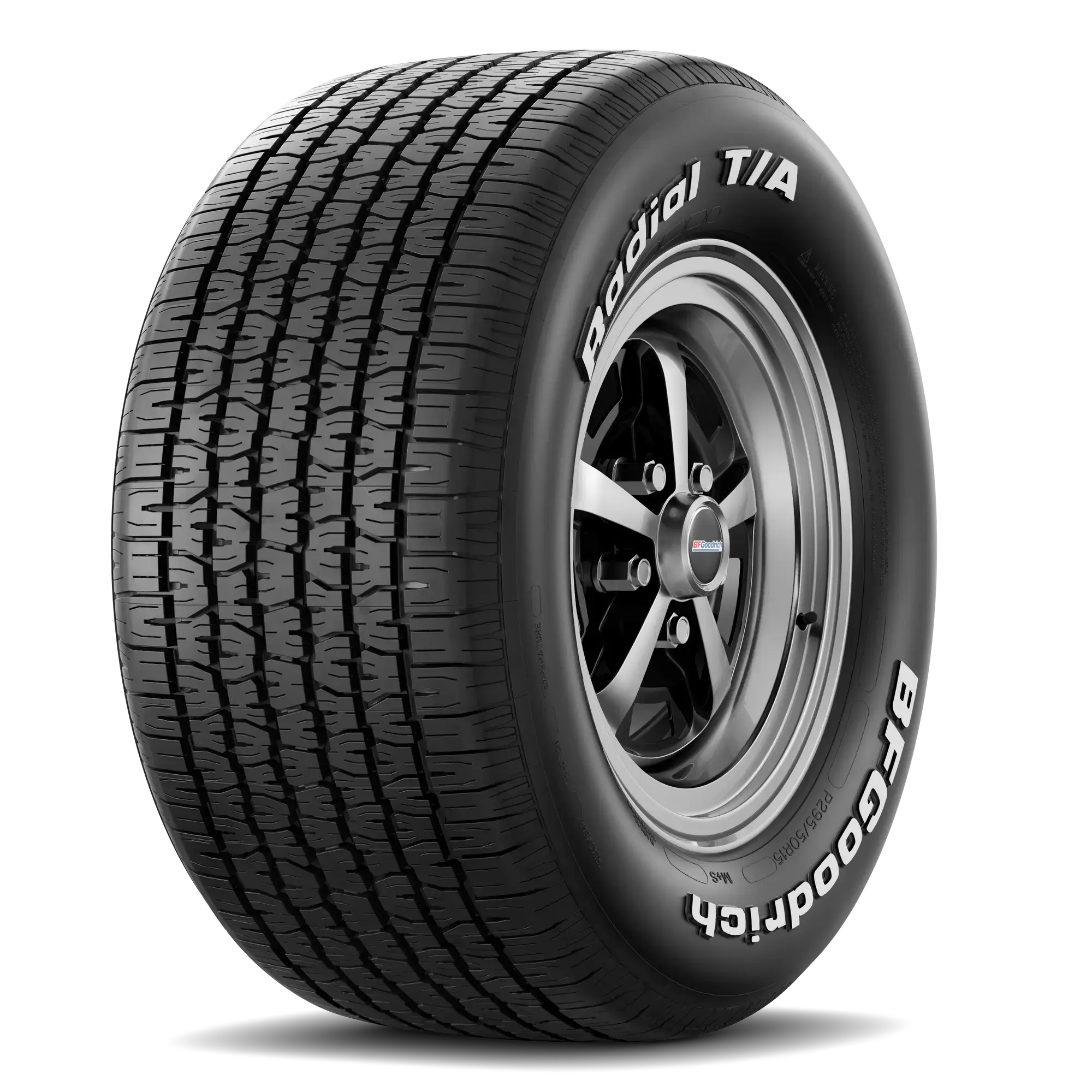
1Raised white letter and enhanced black sidewall styling to complement any vehicle.
2Superb lateral stability and steering response.
3Nearly 40 years of real racing heritage.
4Unique tread block phasing
5Tread compounding and variable groove angle geometry
6M&S rated
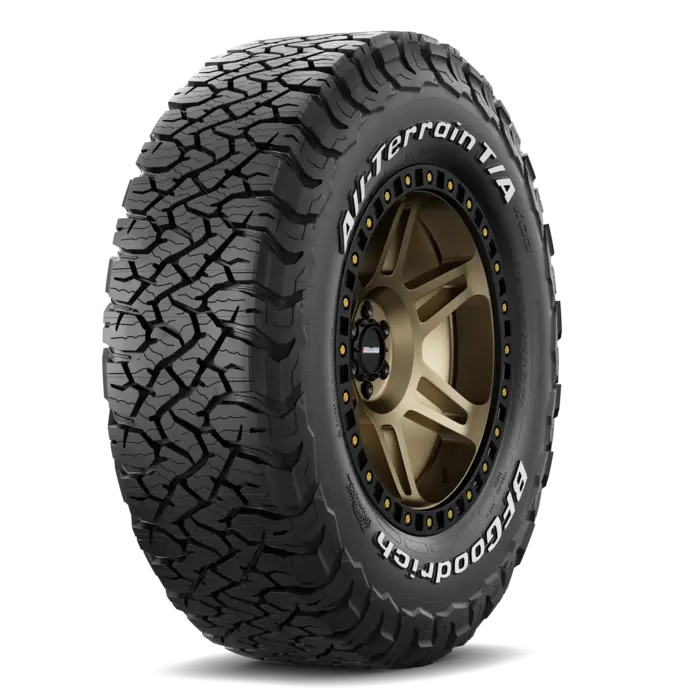
Radial T/A®

An American classic. What it is: Classic looks and modern performance have made the Radial T/A® tire an American performance legend. Black or raised white letter sidewall styling. 50- through 70-series sizes. Who it’s for: Muscle car and street rod owners and light truck drivers looking for a wide profile, classic-looking performance tire.


enlarge image « back view tire construction find a dealer for this tire
Sizes & Specs - Radial T/A®
Tire Size  Service
Description
 Sidewall MSPN Rim Width
Range (inches)
Section
Width on
Measuring
Rim Width
Overall
Diameter
Tread
Depth
(in/32nds)
Revs/Mile
at 45 mph
Max Load
(lbs@psi)
P205/70R14 93S RWL 66748 5 - 7 8.2 on 6 25.4 12 819 1433@35
P215/60R14 91S RWL 98659 6 - 7.5 8.7 on 6.5 24.2 11 860 1345@35
P215/70R14 96S RWL 50228 5.5 - 7 8.7 on 6.5 25.9 12 803 1554@35
P225/60R14 94S RWL 53273 6 - 8 9 on 6.5 24.7 11 842 1455@35
P225/70R14 98S RWL 79604 6 - 7.5 9 on 6.5 26.5 12 785 1675@35
P235/60R14 96S RWL 79644 6.5 - 8.5 9.5 on 7 25.1 11 829 1565@35
P245/60R14 98S RWL 54322 7 - 8.5 9.8 on 7 25.6 11 813 1675@35
P155/80R15 83S RWL 86745 4.5 - 5.5 6.1 on 4.5 24.7 12 842 1069@35
P195/60R15 87S RWL 64472 5.5 - 7 7.9 on 6 24.2 11 860 1190@35
P205/60R15 90S RWL 71072 5.5 - 7.5 8.2 on 6 24.7 11 842 1301@35
P215/60R15 93S RWL 67797 6 - 7.5 8.7 on 6.5 25.2 11 825 1411@35
P215/65R15 95S RWL 78624 6 - 7.5 8.7 on 6.5 26 10.5 800 1510@35
P215/70R15 97S RWL 72634 5.5 - 7 8.7 on 6.5 26.9 12 773 1620@44
P225/60R15 95S RWL 64148 6 - 8 9 on 6.5 25.6 11 813 1521@35
P225/70R15 100S RWL 67244 6 - 7.5 9 on 6.5 27.4 12 759 1753@35
P235/60R15 98S RWL 54712 6.5 - 8.5 9.5 on 7 26.1 11 797 1642@35
P235/70R15 102S RWL 61977 6 - 8 9.5 on 7 28 12 743 1896@44
P245/60R15 100S RWL 60013 7 - 8.5 9.8 on 7 26.6 11 782 1753@35
P255/60R15 102S RWL 71728 7 - 9 10.2 on 7.5 26.8 11 768 1885@35
P255/70R15 108S RWL 45982 6.5 - 8.5 10.2 on 7.5 29.1 12 715 2183@35
P275/60R15 107S RWL 45185 7.5 - 9.5 11 on 8 28 11 743 2149@35
P295/50R15 105S RWL 53415 8 - 10 12.2 on 9.5 26.7 11 779 2061@35
P285/60R16 111T RWL 93229 8 - 10 11.4 on 8.5 29.5 12 705 2403@35
P295/50R16 107S BSW 51487 8 - 10 12.2 on 9.5 27.6 11 754 2149@35
1. The sizes shown are average design values for tires measured on specified measuring rim widths. Some tires may vary from this value by +/-3% of the section height (affecting overall diameter), and +/-4% of the section width.
2. Section width varies approximately 0.2" (5mm) for every 0.5" change in rim width.

WARNING: Serious or fatal injury may result from tire failure due to underinflation or overloading. To ensure correct air pressure and vehicle load, refer to vehicle owner's manual or tire information placard on the vehicle. Serious injury or death may result from explosion of tire/rim assembly due to improper mounting. Only tire professionals should mount tires and they should never inflate beyond 40 psi to seat the beads. Before mixing types of tires in any configuration on any vehicle, be sure to check the vehicle owner's manual for its recommendations.

DANGER: Never mount a 16" diameter tire on a 16.5" rim.

Inflation pressure increase must not exceed the maximum pressure branded on the tire sidewall. When a customer requests a replacement tire with a lower speed rating than the original equipment tire, you must clearly communicate to him or her that the handling of the vehicle may be different, and that its maximum speed capability is limited to that of the lowest speed-rated tire on the vehicle. Exceeding the lawful speed limit is neither recommended nor endorsed.

For high-speed driving, additional inflation pressure and possibly reduced tire loading and/or upsizing is required. In the absence of specific recommendations by the vehicle manufacturer, use the following guidelines based on those in the European Tyre and Rim Technical Organization Standards Manual.

t For speeds over 160km/h (100 mph), load and inflation must be adjusted according to the table below.

S-Speed Rated Sizes:
Maximum Speed (mph) 100 106 112
Inflation Increase (psi) 0.0 1.0 2.0
Load Capacity (% of max.) 100 100 100

T-Speed Rated Sizes:
Maximum Speed (mph) 100 106 112 118
Inflation Increase (psi) 0.0 1.0 2.0 3.0
Load Capacity (% of max.) 100 100 100 100


Learn More > Uniform Tire Quality Grading (UTQG) Ratings

The Uniform Tire Quality Grading Ratings (UTQG) is a tire information system designed to help you make the relative comparisons among all passenger car tires. The UTQG rating tells you about the tire's treadwear, traction, and temperature grades.

Size Treadwear Traction Temperature
P205/70R14 400 A B
P215/60R14 400 A B
P215/70R14 400 A B
P225/60R14 400 A B
P225/70R14 400 A B
P235/60R14 400 A B
P245/60R14 400 A B
P155/80R15 400 A B
P195/60R15 400 A B
P205/60R15 400 A B
P215/60R15 400 A B
P215/65R15 400 A B
P215/70R15 400 A B
P225/60R15 400 A B
P225/70R15 400 A B
P235/60R15 400 A B
P235/70R15 400 A B
P245/60R15 400 A B
P255/60R15 400 A B
P255/70R15 400 A B
P275/60R15 400 A B
P295/50R15 400 A B
P285/60R16 400 A B
P295/50R16 400 A B

The Uniform Tire Quality Grading (UTQG) is a tire information system designed to help you make relative comparisons among all passenger car tires, except for deep tread, winter-type snow tires; space-saver or temporary use spares; or tires with normal rim diameters of 12 inches or less.

The UTQG is not a safety rating and not a guarantee that a tire will last for a prescribed number of miles or perform in a certain way. It simply gives you additional information to combine with other considerations, such as price, brand loyalty, and dealer recommendations. Under UTQG, tires are graded by the manufacturers in three areas: treadwear, traction, and temperature resistance.

The UTQG information can be found on two places on the tire: there is a paper label affixed to the tread, and the grades are also molded into the sidewalls.

Treadwear
The treadwear grade is a comparative rating based on the wear rate of the tire when tested under controlled conditions on a specified government test course. For example, a tire graded 150 would perform over one and a half (1.5) times as well on the government course as a tire graded 100. The relative performance of tires depends upon the actual conditions of their use, however, and may depart significantly from the norm due to variations in driving habits, service practices, and differences in road characteristics and climate.

Traction - AA, A, B, AND C:
The traction grades from highest to lowest are AA, A, B, and C and they represent the tire's ability to stop on wet pavement as measured under controlled conditions on specified government test surfaces of asphalt and concrete. A tire marked C may have poor traction performance. The traction grade assigned to this tire is based on braking (straight ahead) traction tests and does not include cornering (turning) traction.

Temperature - A, B, and C:
The temperature grades are A (the highest), B, and C, representing the tire's resistance to the generation of heat and its ability to dissipate heat when tested under controlled conditions on a specified indoor laboratory test wheel. Sustained high temperature can cause the material of the tire to degenerate and reduce tire life, and excessive temperature can lead to sudden tire failure. The grade C corresponds to a level of performance that all passenger car tires must meet under the Federal Motor Vehicle Safety Standard No.109. Grades A and B represent higher levels of performance on the laboratory test wheel than the minimum required by law. The temperature grade for this tire is established for a tire that is properly inflated and not overloaded. Excessive speed, underinflation, or excessive loading, either separately or in combination, can cause heat buildup and possible tire failure.

 Close


Close