PLUS 1, 2, ETC.
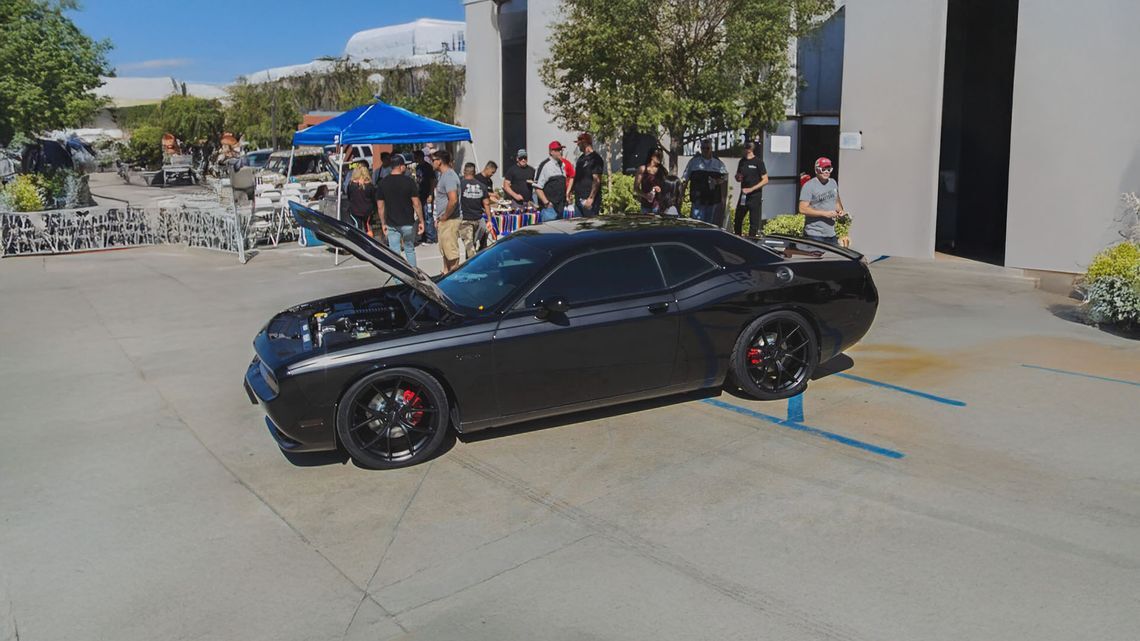
The most popular form of plus-sizing is increasing your vehicle’s wheel diameter and your tire’s rim diameter. An example is changing from a 14” wheel to a 15” wheel. This is called “plus 1.” (Going from 14” to 16” is plus 2, etc.) To make plus-sizing work, the tire’s aspect ratio decreases while the wheel diameter increases. (Note: The overall diameter of the tire never changes, just the wheel diameter.)
PLUS ZERO
If you want to leave your wheel diameter the same, you can still change to a wider tire. (Note: You may need a wider wheel as well.) An example is going from a P195/75R14 tire to P215/65R14 tire. What this means is that your tire width will be wider (195 millimeters to 215), your aspect ratio will be smaller (75 to 65) but the wheel diameter stays the same (14 and 14). Why do this? A larger contact patch on the road can mean better grip and handling.
WHAT IS STAGGERING
A staggered fitment is when you put larger wheels on the back of your vehicle than the front. This specification comes from the vehicle’s manufacturer, and is designed to improve performance on vehicles with rear-wheel-drive. A dramatic example of staggering is a drag race car.
VERY IMPORTANT PLUS-SIZING LEGAL:
BFGoodrich Tires does not recommend up-sizing due to safety reasons. If wheel diameter is increased too much, (from 14” to 17”, for example), or if a staggered fitment is used, then your anti-lock brakes, speedometer and stability system may not work properly. Some manufacturers have already tested and approved multiple wheel diameters, so be sure to ask your authorized BFGoodrich Tires dealer on any sizing needs. (To find one close to you, use the Dealer Locator on this web page.)

Dealer Locator
Search among our dealers to find where your tire is available
Frequently asked questions
BFGoodrich answers your most asked questions.
FAQ
Plus-sizing means going up in wheel diameter while reducing the tire's aspect ratio, so overall rolling diameter stays as close to original as possible. A plus-one from 17-inch to 18-inch wheels means a shorter sidewall on a larger wheel. Keeping overall diameter within roughly 3 percent of original preserves speedometer accuracy and drivetrain calibration.
Done properly, yes. A shorter stiffer sidewall flexes less under cornering load, which sharpens steering response and reduces roll in the contact patch. A wider tread puts more rubber on the road. The trade-offs are a firmer ride, more vulnerability to pothole damage, higher unsprung weight, and typically more road noise.
Speedometer and odometer error if overall diameter changes too much. Rubbing on the fender, frame, or suspension at full lock or full compression. Insufficient load capacity if the new tire's load index is lower. Compromised ABS and stability control calibration. Reduced ride comfort and greater vulnerability to wheel damage from potholes.
Very likely. A different tire size at the same pressure carries a different load. The replacement tire must be inflated to provide the same load capability the original size delivered at the manufacturer's recommended pressure. Do not guess this. Have a tire professional calculate the correct pressure for your new setup.
Larger diameter tires increase ground clearance and improve approach and departure angles, which helps off-road. But lower profile plus-sizing goes the opposite direction, giving a shorter sidewall that is more vulnerable to rock damage and less able to be aired down. For off-road, prioritize sidewall height and toughness over wheel diameter.
Related pages
Related articles
-
Changing Tire Size on a Car
If you install a different size than your original equipment tire, every vehicle manufacturer specification still has to be maintained. The most commonly missed one is inflation pressure. Your replacement tire must be inflated to provide the same load capability that the original size delivered at the manufacturer's recommended pressure. That is a calculation, not a guess, and getting it wrong affects load capacity and safety.View more -

Common Questions to Ask Your Tire Dealer
Walking into a tire shop without preparation is how drivers end up with the wrong tire at the wrong price. Five specific questions change that dynamic completely. They cover fitment, seasonal suitability, warranty terms, what is actually included in installation, and whether the tire you want can be ordered rather than settling for whatever is in stock today.View more -

Mixing Car Tire Sizes
Mixing tire sizes, types, or constructions on the same vehicle creates handling imbalances that show up exactly when you need the vehicle to behave predictably. For four-wheel drive vehicles, if your owner's manual gives no instructions on mixing, the safest rule is simple: do not mix sizes. Matching all four positions gives you consistent grip, consistent braking, and consistent behavior in an emergency.View more -

Performance Tire Guide
If your car is high-performance, doesn’t it make sense to have tires that are just as high-performance? The main benefits of performance tires are higher speed capability, improved handling and maximum dry road grip*. (The negatives are lower tread life and higher costs.) But you need to know that all performance tires aren’t the same, which is why many high performance car owners own multiple sets of tires. (They often switch to all-season or winter tires in the fall and winter for improved winter grip.)View more -

What are All-Season Tires?
Each tire category is built for a temperature range, and using one outside that range costs you either safety or tread life. All-season tires handle warm weather well and moderate winter conditions reliably. Summer tires are optimized for warm conditions and should not be used where temperatures consistently approach freezing. Winter tires are engineered for severe cold, snow, ice, and slush.View more -
About BFGoodrich Tires
When you choose a tire, you’re choosing how much fun you can have in the driver’s seat. And if you can appreciate higher performance, BFGoodrich® brand is the tire for you. Decades of motorsports success have helped us develop tires to give you the grip and control that your spirited driving demands — either on-road or off. Because the more control you have, the more fun you’ll have too.View more -

Tire Wear and Tire Sidewall Damage
Tire wear patterns are a diagnostic tool. Where the tread wears tells you exactly what is wrong with the vehicle underneath. Shoulder wear on both edges means chronic underinflation. Center wear means overinflation. One-sided wear means an alignment issue. Cupping means imbalance or worn shocks. Reading the pattern points you at the cause, and fixing the cause protects your next set of tires.View more