Tire size
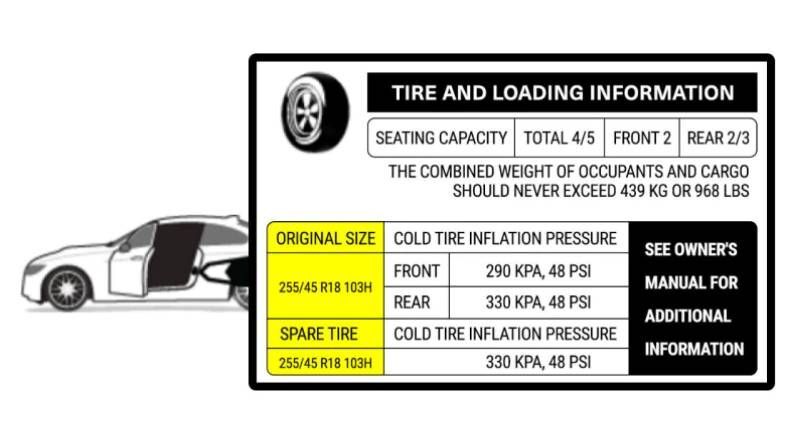
OEM stands for Original Equipment Manufacturer. Quite simply, these are the tire specs that originally came with your vehicle, according to the manufacturer (Honda, Ford, etc). It includes the tire size, rim size, the aspect ratio, etc. To learn how to read this information, click here.
Tire pressure
The correct tire pressure to inflate your tires can be located on the vehicle or tire placard or Vehicle Owners Manual and is the proper tire pressure to maintain, so your tires can give you maximum performance, including gas mileage and tread life. For proper results, make sure your tires haven't been driven for three hours before you check for air pressure. (Friction creates heat, which increases tire pressure and gives improper readings.) Be aware that the air pressure displayed on the tire sidewall is the maximum pressure, not the recommended tire pressure.
Frequently asked questions
BFGoodrich answers your most asked questions.
FAQ
Look at the sidewall of any tire on the vehicle. You will see a code such as 245/65R17. That is your size: 245mm section width, 65 aspect ratio, radial construction, 17-inch rim. Confirm it against the placard on your driver's door jamb, which lists the size the manufacturer specified from the factory.
Start with the OEM size on your door placard. That size is guaranteed to fit and delivers the handling, load capacity, and speedometer accuracy the manufacturer engineered. Alternative sizes may fit, but changing width, aspect ratio, or diameter affects speedometer calibration, load capacity, and clearance, so verify any alternative with a tire professional first.
Driving creates friction, friction creates heat, and heat raises the pressure inside the tire. A tire checked right after driving reads higher than its true cold pressure, and setting pressure from that reading leaves you underinflated once it cools. Three hours parked, or before you drive in the morning, gives an accurate cold reading.
On most vehicles yes, but some performance cars use a staggered fitment with wider tires on the rear. Check the placard carefully, because it lists front and rear sizes separately when they differ. It may also list different recommended pressures front to rear based on weight distribution.
Speedometer and odometer readings become inaccurate, which affects your fuel economy math and your warranty mileage records. Load capacity may be insufficient for the vehicle's weight. Clearance problems can cause rubbing under full steering lock or suspension compression. Stability control and ABS calibration can also be affected.
Related pages
Related articles
-

Tire Anatomy & Tire Construction
A radial tire is built from six main parts, and knowing what each does explains why some damage is repairable and some is not. The tread grips and resists wear. The carcass ply cords determine strength. The beads clamp against the rim for an airtight fit. The sidewall absorbs impacts from curbs and rocks and carries all the printed specs. This structure is the fastest route to understanding tire performance.View more -

Tire Speed Rating Chart
Speed ratings are not just about speed. They correlate directly with ride comfort, treadwear, and cornering ability. Typically the higher the speed rating, the better the grip and stopping power, but the shorter the tread life. Ratings run from A at the lowest to Y at the highest, and the chart is not strictly alphabetical: H sits between U and V, a holdover from when H stood for high performance.View more -
How to Read a Tire Sidewall
A tire’s sidewall is pretty much what it sounds like – the outer and inner “walls” on the sides of a tire, if facing a tire on its side. Every sidewall has its own unique information that is divided into four main sections:View more